
Somewhere in an old jar, a drawer, or a jacket pocket, there might be a coin worth a hundred times its face value. Nobody notices these coins because they look completely normal at first glance, and that is exactly why so many of them slip through unnoticed for years.
Rare coin collecting has quietly become one of the most interesting ways to build wealth outside stocks and real estate. Unlike a stock chart that can crash overnight, a genuine rare coin holds its story, its scarcity, and its value no matter what the market is doing that day.
This guide breaks down exactly how to spot a valuable coin, how grading and authentication actually work, and which coin collectors chase the hardest. By the end, you will know enough to look at your own spare change a little differently.
What Is a Rare Coin and Why Does It Matter to Collectors
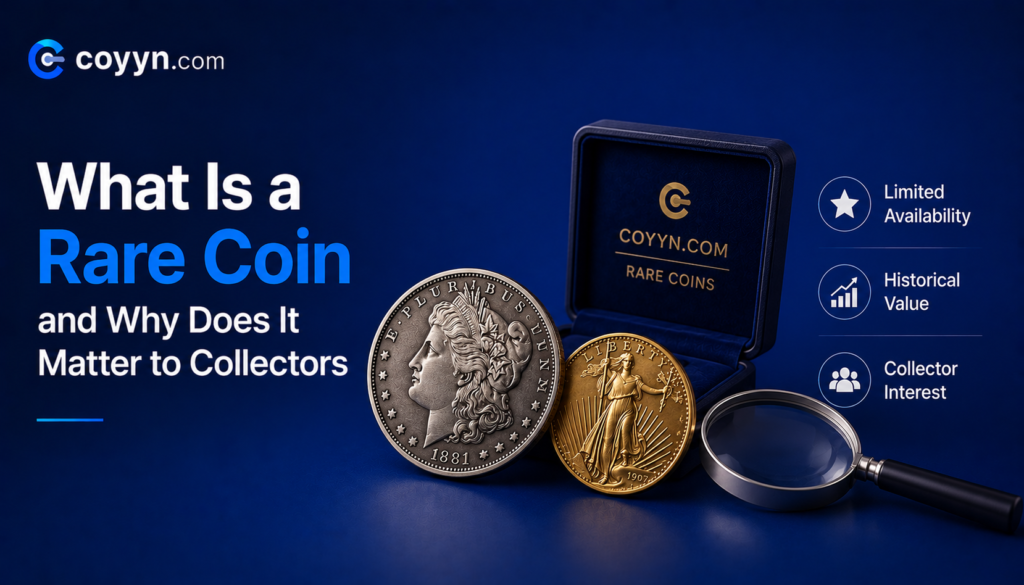
A rare coin is an old piece of metal currency worth more than its face value because very few of that exact design still exist today. These coins attract all kinds of people, history lovers, casual family hobbyists, and serious investors looking for alternative assets outside stocks and real estate.
The whole point of this hobby is finding pieces that can hold or grow in value over many years. Unlike stocks, a well kept coin does not lose value overnight just because the market had a bad day. You will learn how a mint presses metal into coins, how to read manufacturing dates, and how to build real knowledge instead of just guessing. Having this knowledge means you can look through a coin collection with real confidence before ever spending a dollar.
Rare Coin Identification: How to Recognize Valuable Coins
Sorting through a coin collection means giving every piece a proper look before buying or selling anything. Learning basic rare coin identification means you can spot small details using nothing more than a magnifying glass at your kitchen table.
- Look for the tiny mint mark letter to see which city factory made the coin, common marks include D for Denver, S for San Francisco, and P for Philadelphia
- Check the exact minting date stamped on the coin’s face to figure out its age
- Watch for mint errors like double struck lettering or off center borders, both caused by old factory machine mistakes
- Study the strike quality on the coin’s design, sharper details usually mean a higher grade and higher value
- Check the front and back for deep scratches, dents, or signs the coin has been cleaned, since cleaning actually lowers value
Looking closely at these details tells you if an old coin is just pocket change or something worth real money. It also helps collectors spot die varieties, small design differences between coins struck from different tools, and key date scarcity, meaning certain years are much harder to find than others.
Understanding Rare Coin Grading and Why It Affects Value
Ever wonder why two coins that look almost the same can sell for completely different prices? That gap comes down to rare coin grading, a scoring system that measures surface wear on a scale from 1 to 70. The closer a coin scores to 70, the higher its value climbs among serious collectors.
A coin that never entered public circulation earns a high Mint State grade, often shortened to MS, and carries a real price premium. To get an accurate score, professional grading services like PCGS or NGC examine coins under high powered microscopes, checking things a normal eye would completely miss.
They check the coin’s original shine and separate common circulated coins from high gloss proof coins made specifically for exhibitions and collectors. Knowing a coin’s true grade means you never overpay when buying from a professional dealer, and it also means you never sell for less than a coin is actually worth.
Rare Coin Authentication: How to Verify Authenticity
Buying an old silver dollar without checking it first can leave your money exposed to modern scams, and fake coins are more common than most beginners realize. Running a full rare coin authentication check makes sure the coin actually matches what the seller claims it is.
- Look for a certified holder from trusted grading labs like PCGS or NGC, since these companies have strict fraud checks in place
- Check for a tamper evident plastic slab capsule that seals the coin away from air and finger oils
- Inspect the coin’s edges closely for hidden seams, which often reveal a fake or counterfeit design
- Weigh the coin on a digital scale to confirm the metal weight matches official mint records
- Verify the certification number on the grading company’s online database to confirm the coin’s history checks out
Following these steps removes a lot of the stress and risk from coin collecting. It gives beginners and experienced collectors alike a clear way to protect their money from fake coins circulating online.
Rare Coins List Every Beginner Should Know
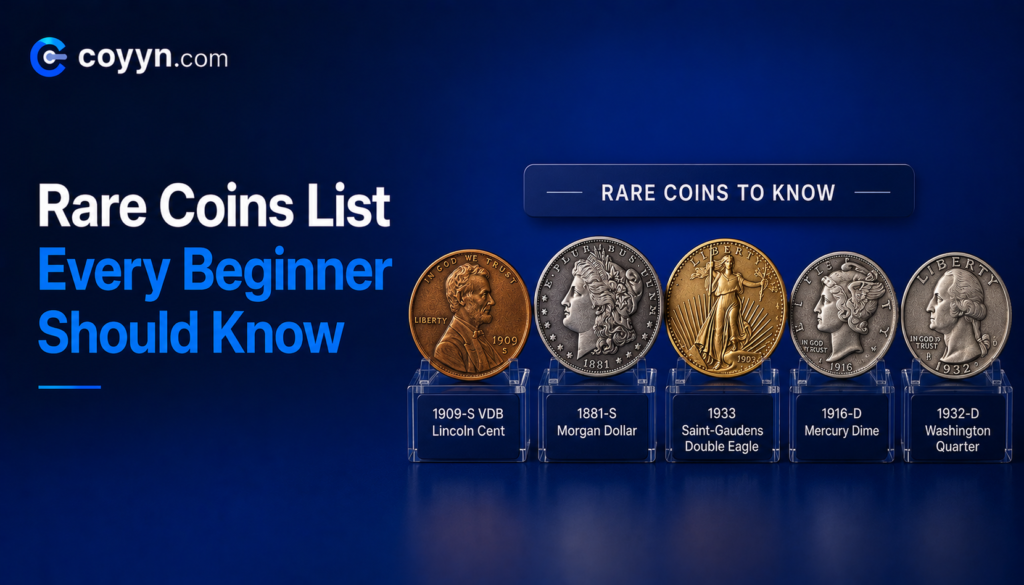
Starting a coin collection does not mean reading through stacks of dense history books first. A basic rare coins list gives new collectors a solid starting point, connecting the hobby to coins that serious collectors already track closely:
- The 1955 Lincoln Cent Doubled Die, featuring rare double stamped dates and lettering on the copper face, some examples have sold for over $1,000
- The 1893-S Morgan Dollar, tied to the industrial railroad expansion era of the American west, one of the most valuable Morgan Dollars ever struck
- The 1937-D Three Legged Buffalo Nickel, carrying a famous mint defect where one leg is missing due to a factory machine error
- The 1932-D and 1932-S Washington Quarters, silver coins struck during the early years of the design, both considered key dates
- The 1933 Saint Gaudens Double Eagle, an ultra rare gold coin that holds one of the highest public auction prices ever recorded for a coin
This list gives beginners a real starting point for building coin knowledge. Each piece here helps build a foundation before moving into deeper historical research on specific coin series.
Why Some Rare Coins Become More Valuable Than Others
Coins that sell for millions at auction all share one thing in common, true scarcity combined with strong demand. A coin is not valuable simply because it is old. Its final price depends on how many collectors want it and how few examples remain.
If a mint melted down a batch of gold or silver coins years ago because of a law change, the surviving coins become incredibly scarce almost overnight. Value climbs even higher when a coin has kept its original condition after decades or even centuries in storage. Auction records consistently show collectors paying real premiums for coins with an interesting backstory, like a war era mintage or a famous mint mistake. Watching these scarcity patterns helps collectors pick coins that hold value even when other markets shift.
Rare Coin Collecting Tips for Beginners
Building a solid coin collection comes down to a handful of simple habits that protect your investment over time. Following some straightforward rare coin collecting steps helps turn a casual hobby into something genuinely valuable down the road.
- Buy a proper coin album or protective coin capsules early on to guard against air exposure and scratches
- Use secure coin holders and storage boxes designed specifically for coin preservation
- Keep clean records and digital notes of every purchase, including price paid and seller information
- Join an online collector community to trade tips, ask questions, and learn from people with more experience
- Study historical minting records regularly to learn which key dates carry the strongest long term value
Staying consistent with these habits keeps a collection in strong shape for years. It also makes selling much easier later, since organized collections with clear records tend to attract serious buyers faster.
Common Mistakes Every New Coin Collector Should Avoid
Plenty of new collectors make the same costly mistakes early on, often without realizing the damage until it is too late. The biggest mistake by far is trying to clean a coin at home using soap, vinegar, or a rough cloth. This strips away the coin’s natural aged surface, called patina, and can cut its value by more than half instantly.
Another common mistake is buying expensive coins from unknown online sellers without running a proper check first. Skipping a coin’s official grading status leaves buyers wide open to counterfeits, some of which are good enough to fool an untrained eye completely. It is also worth avoiding cheap plastic folders, since many contain chemicals that cause discoloration and damage over time.
Avoiding these traps protects your money and keeps a coin’s value intact for future resale at an auction house or through a coin dealer.
Final Thoughts
Getting into the world of coin collecting by gathering historical currency is a rewarding way to build wealth through both history and true scarcity. Sticking with continuous learning about rare coin grading helps collectors avoid common counterfeits before buying that first silver dollar or gold piece.
Keeping a collection organized turns a simple hobby into something that holds real value through economic ups and downs. Have you ever thought about using an app to log the mint marks and history behind your own coin collection?
FAQs
What is the easiest way to identify a rare coin?
Check the date and look for small mint mark letters using a magnifying glass. Also confirm whether the coin is sealed inside a certified holder from a trusted grading network like PCGS or NGC.
How can I know if my old coin is worth money?
A coin is likely worth money if it has very low remaining supply, a high condition grade, or a rare factory mint error. Checking recent global auction records shows exactly what buyers are currently paying for similar pieces.
What are the most common rare coins for beginners?
Beginners usually start with silver Morgan Dollars, Washington silver quarters, and classic Lincoln pennies with double stamped errors, since these pieces are relatively easy to find and track online.
How do price factors affect a coin’s value?
A coin’s value rises when its condition is pristine, its authenticity is fully certified, and collector demand is strong. The raw market price of the gold or silver bullion inside the coin also sets a baseline value even before rarity is considered.
Where can I get a rare coin authenticated safely?
Submit the coin to independent, well known grading companies like PCGS or NGC. They run thorough checks to grade the coin and seal it safely inside a protective, tamper proof capsule.