
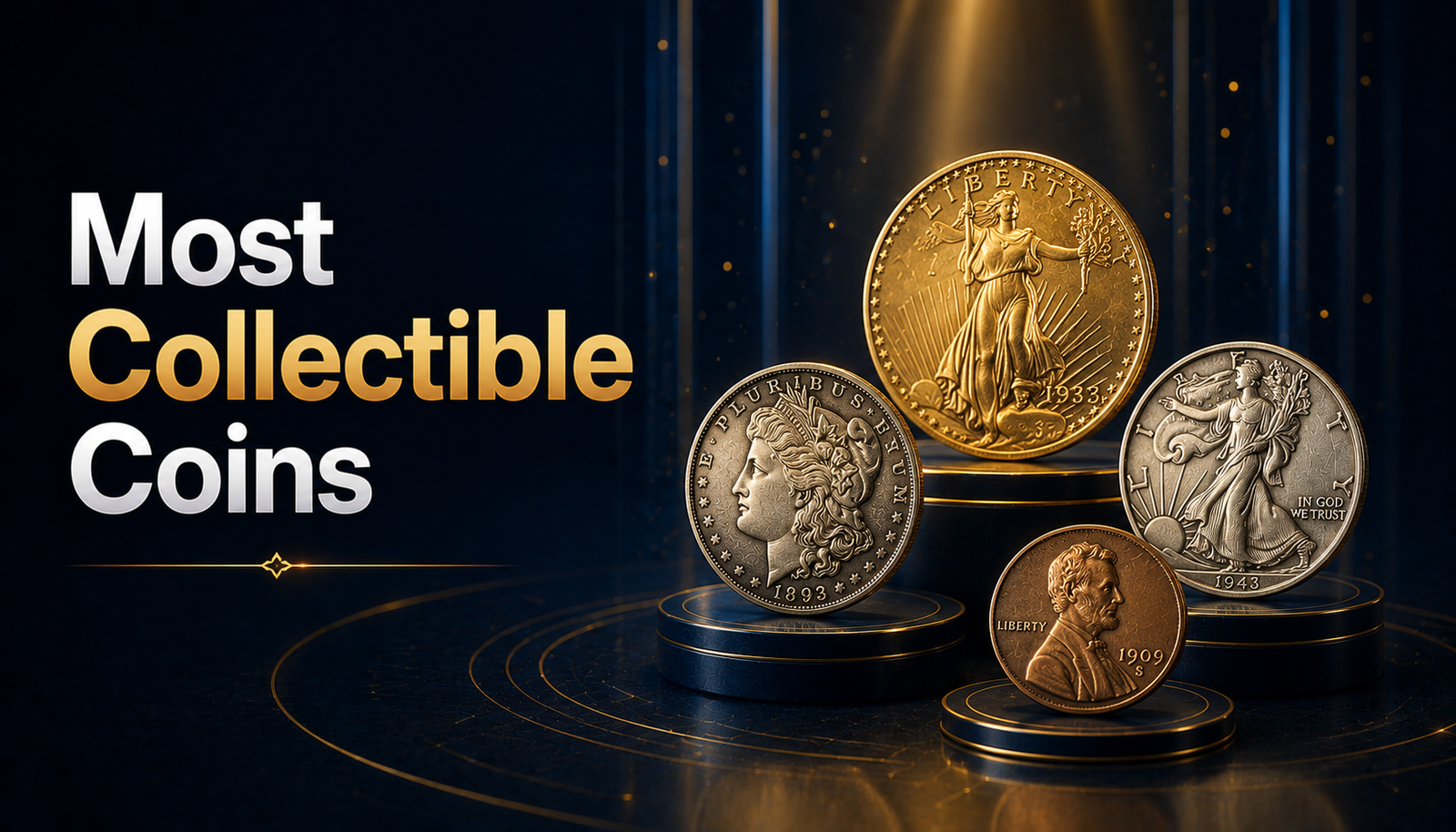
An old cigar box sits forgotten in a closet somewhere, filled with coins nobody has looked at in years. One of them could easily be worth thousands of dollars, and it stays that way simply because most people assume an old coin is just an old coin.
That assumption costs casual collectors real money more often than you would think. Age alone rarely decides what a coin is worth. Low production numbers, genuine historical significance, and strong collector demand matter far more, so much so that a coin from the 1960s can easily outvalue one from the 1800s if it happens to be rarer or carries a famous minting mistake.
This guide breaks down what actually makes a coin worth collecting, covering everything from the most sought after US pieces to record breaking sales at major auction houses. By the end, even a quick look through your own spare change might feel a lot more interesting than it did five minutes ago.
What Makes Some Coins More Collectible Than Others
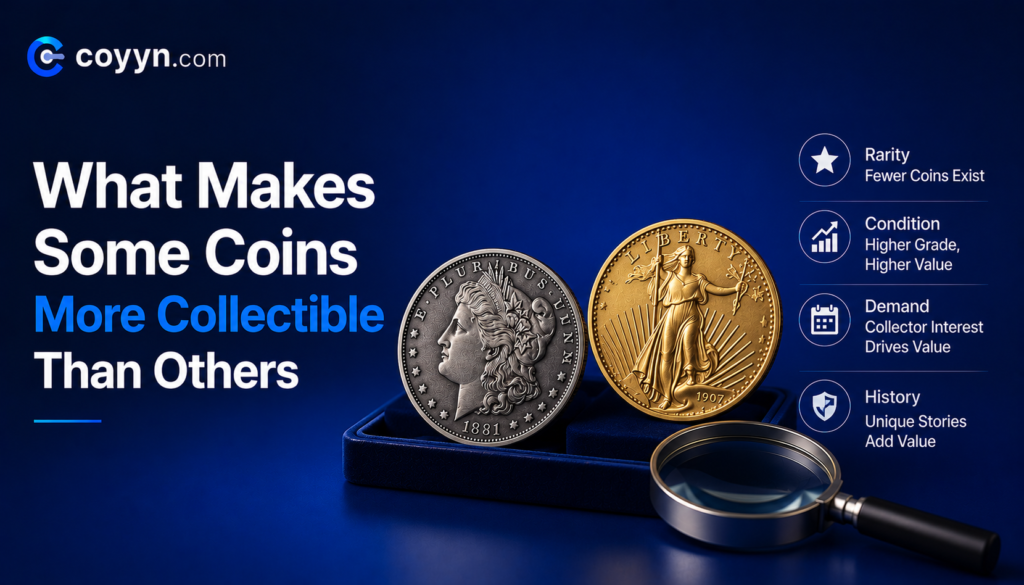
A regular coin is only worth its face value, but the most collectible coins sell for far more because so few of them exist. A coin becomes highly sought after when the mint only strikes a small batch of that design in a given year. When supply on the open coin market stays low, collector demand pushes prices up fast at public auctions.
Historical importance plays a big role too in determining how much an antique numismatics piece is worth today. A coin struck during a major historical event, or one carrying a unique mint mark, pulls in buyers because of that background story alone. And condition still matters just as much as history. A clean, uncirculated coin will always beat a heavily scratched one, no matter how rare the design happens to be.
Most Collectible US Coins Every Collector Should Know
Getting started with coin collecting does not mean digging through stacks of dense history books first. A basic list of the most collectible US coins gives you a solid starting point, connecting your hobby to pieces that collectors already track closely across the web:
- Classic Lincoln Cent error variations, popular key dates struck in surprisingly low numbers
- The iconic Morgan Dollar silver series, tied to the massive industrial railroad expansion era of the old west
- Buffalo Nickel coins, known for their beautiful, rustic artwork showing early frontier heritage
- Washington Quarter silver batches, pressed during the early to mid century production years
- The ultra rare Saint Gaudens Double Eagle gold coins, prized for their intricate design and craftsmanship
This list is a great starting point for building some real financial literacy in the antique coin world. Each piece here helps you understand the American coin market before digging into deeper historical research.
Most Collectible Coins in the World Worth Knowing About
Expanding your collection past your own country opens the door to iconic global currencies with steady international demand. Learning about the most collectible coins in the world helps you spot famous, limited mintage pieces that carry record breaking prices at public auctions. These legendary coins are prized worldwide because of both global collector demand and their unique minting backstories.
Pieces like the ancient Flowing Hair Dollar and the ultra rare Brasher Doubloon have sold for millions to top alternative asset buyers. On the modern side, collectors regularly track high grade bullion coins like the Canadian Gold Maple Leaf, the British Sovereign, and the Australian Kangaroo. These modern options offer a solid layer of wealth protection too, since their high precious metal content sets a safe baseline value even when other markets shift.
Most Valuable Coins to Collect and Why They Stand Out
Finding the most valuable coins to collect means understanding why certain historical pieces earn legendary status among serious collectors. Most high value coins stand out because of extreme scarcity or rare factory mint errors that make them one of a kind. The famous Liberty Head Nickel series and certain gold Double Eagle issues, for example, regularly command top dollar at competitive coin auctions.
Prices on these elite pieces climb fast when collector demand outpaces the remaining global supply. Coin value can shift based on changing market conditions and broader economic trends, just like any other asset.
That said, high grade historical coins tend to hold up well even during typical stock market ups and downs, making them a genuinely convenient way for collectors to diversify their money using physical history instead of just paper assets.
Most Expensive Coins to Collect Ever Sold at Auction
Public auction records show just how high coin values can climb when serious collectors compete for rare pieces. The most expensive coins to collect usually change hands at major auction houses like Sotheby’s, Stack’s Bowers, or Heritage Auctions. These events draw international attention since the coins on the block represent the absolute top tier of rarity and history.
The all-time record holder is the 1794 Flowing Hair Dollar, which sold for over ten million dollars as the very first silver dollar ever struck by the United States mint. Another legendary piece, the 1933 gold Double Eagle, fetched millions after nearly the entire batch was melted down before ever leaving the factory, leaving only a handful of surviving coins. These famous sales show that serious buyers pay massive premiums for pristine condition backed by verified authenticity.
Why Some Coins Become Collector Favorites Over Time
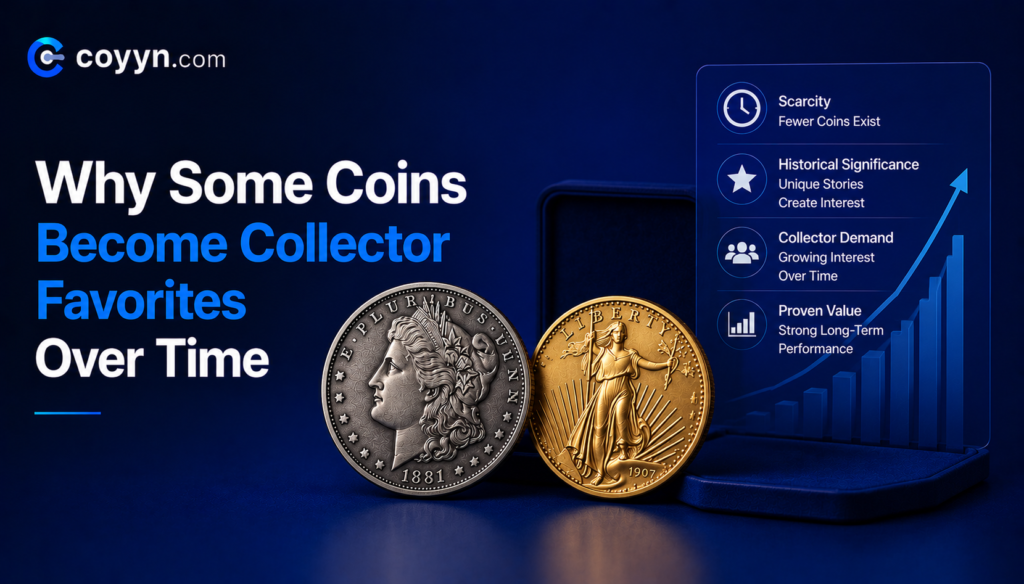
Understanding why certain coin designs become the most collected coins comes down to how art, nostalgia, and community interest all blend together. A coin does not win over collectors just because of its metal content. It needs a design that actually tells a story people connect with. Over the decades, coins with strong artistic detail build up real demand that keeps the entire market stable.
Major historical events and limited availability also turn regular pocket change into long term favorites. When a mint shuts down a production line early, it creates a natural bottleneck that sparks serious collector interest across the globe.
This growing popularity keeps certain coins at the top of every research list, which actually helps beginners buy with more confidence and less guesswork.
Tips for Building a Valuable Coin Collection
Building a set of high demand historical coins takes a systematic approach to hunting and tracking your collection from day one. Instead of buying random old coins that catch your eye, pick a specific theme, like silver dollars from a certain era, to give your collection real focus and direction.
- Focus your budget on coins with low production counts to keep long term demand strong
- Choose uncirculated pieces whenever possible so your coins keep their crisp design details
- Use hard plastic capsules and airtight storage to protect metal from moisture, dust, and finger oils
- Keep an accurate digital log of every trade, including receipts and certified tracking numbers
- Check grading network databases to confirm certification numbers match each coin’s history
- Talk to experienced collectors in online forums to learn how to spot underpriced coins before making a deal
Following these habits takes a lot of the guesswork out of the hobby and keeps your whole collection organized. It also means you can monitor your entire stash easily, right from your phone, whenever you want.
Common Mistakes New Coin Collectors Should Avoid
One of the most common mistakes beginners make is focusing purely on how old a coin looks. Plenty of new collectors assume anything from the 1800s must be worth thousands of dollars, then end up overpaying for common dates that nobody actually wants. It is always smarter to check verified auction records rather than buying based on guesswork or excitement in the moment.
Another major mistake is rubbing coin surfaces with water, rough paper towels, or household polish. This leaves tiny scratches on the design that instantly drop a coin’s certified grade and scare off buyers at auction.
On top of that, a lot of collectors store coins loosely in cardboard boxes or PVC plastic sleeves that leak harmful chemicals over time, causing ugly stains and ruining a coin’s condition long before it ever reaches a dealer.
Final Thoughts
Hunting down sought after historical coins mixes real learning with genuine curiosity in a way few hobbies manage. Basing your choices on low mint numbers and certified grading keeps the whole process clear and straightforward, even for total beginners.
Every unusual penny or historical silver dollar added to a collection becomes a small physical snapshot of global industrial heritage. Have you ever thought about using a mobile app to track the specific mint locations across your own growing stash?
FAQs
What makes a coin collectible?
A coin becomes collectible based on low mintage numbers, historical importance, pristine condition, and strong market demand. Age alone does not decide value. A rare twentieth century coin can easily outvalue a common ancient one.
Which US coins are the most collectible?
Popular choices include silver Morgan Dollars, early Lincoln penny error variations, Buffalo Nickels, and key date Washington quarters. Gold pre-1933 Double Eagles are also highly prized among more advanced collectors.
What are the most valuable coins to collect?
Coins like the 1794 Flowing Hair Dollar, the 1933 Double Eagle, and the 1913 Liberty Head Nickel hold record breaking values, driven by extreme scarcity and intense demand at major auction houses.
How can I start collecting coins?
Start by checking your own pocket change for pre-1965 silver coins or unusual mint errors. Pick up a basic coin album and study reliable numismatics price guides to learn which key dates matter most.
Should I buy graded coins?
Yes, coins graded by trusted companies like PCGS or NGC are a smart choice for beginners. Grading confirms the coin’s authenticity and helps make sure you pay a fair market price.