

Setting aside your daily startup profits to fund a specific infrastructure development or technology asset should always be a major choice for growth minded business teams. Many young company owners struggle to expand their wealth because they keep all their extra funds sitting inside basic savings folders.
Deploying your extra capital into targeted project investing setups gives you a clear path to back real world business actions safely from home. This specialized financial planning model ensures that your extra cash reserves build stable value away from public trading loops.
Choosing a direct investment project functions like an independent engine that boosts your overall return on investment (ROI) without relying on traditional market structures. It gives startup founders the perfect toolkit to connect their capital to highly profitable new investment opportunities directly on the web.
Let us take an authoritative look at how this advanced project finance model operates so you can manage your long term wealth goals with absolute confidence.
What Is Project Investing and How Does It Work
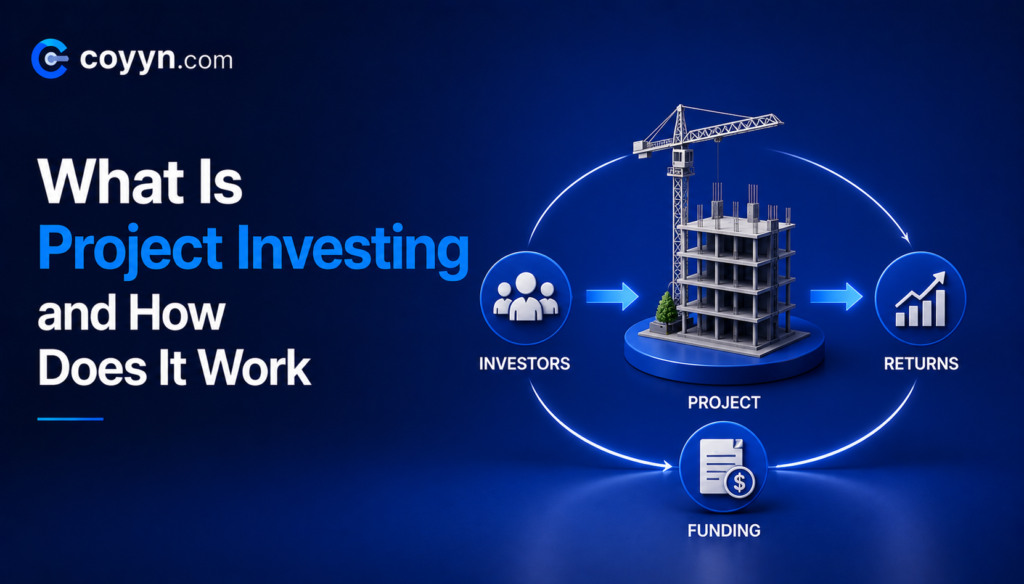
Modern project investing is a specialized financial practice where individual investors deploy capital straight into a single business venture rather than buying tiny stock shares of a massive global corporation. These direct capital investment steps give creators a clear, transparent look at exactly how their funds are used to build factories, software tools, or solar plants. The primary purpose of this approach is to provide a clean funding line to support high yield business projects that generate steady, predictable payouts across multiple years.
This direct funding model has become incredibly popular among small business owners because it bypasses the high platform fees and slow underwriting loops of legacy high street banks.
Participants in this financial network include private angel investors, venture capital syndicates, and everyday startup teams who want to diversify their capital assets safely. When you join an active project, your money goes to work immediately to build real world infrastructure, giving your corporate wallet an exceptional layer of economic security.
Why Investors Choose Projects Instead of Traditional Investment Options
Traditional investment options like public stocks and fixed income government bonds usually feel completely disconnected from your regular daily business operations. Shifting your company growth funds into specific corporate ventures allows you to design a highly personalized investment strategy that matches your exact financial goals.
- Massive growth potential since backing an early stage business project yields much higher rewards than a stagnant street bank savings folder
- High portfolio diversification elements that spread your capital away from general stock market volatility completely
- Long term returns that accumulate compound interest steadily over a five year or ten year operational investment horizon
- Tangible connection to real estate properties, energy infrastructure pipelines, and physical manufacturing machinery lines
- Custom alignment with your personal corporate values by allowing you to choose exactly which technology ventures to fund
Balancing your wealth building strategy across these unique asset varieties shields your independent career from unexpected economic down trends. It provides self employed operators with a highly convenient way to optimize their cash reserves while their money works quietly in the background to expand their corporate runway.
Key Factors to Review Before You Invest in Any Project
Reorganizing your personal capital allocation guidelines requires completing a strict due diligence check before you wire any cash to an external venture. Learning how to judge a project invest opportunity safely ensures you can deploy your funds without exposing your short term operational cash reserves to unnecessary hazards.
- Run a thorough feasibility study to check if the target company’s business model can actually survive in the open market
- Conduct deep market research to confirm that real consumers are actively searching for the product or service being built
- Review all historical financial projections and check their cash flow statements to verify that their profit math is realistic
- Study the management team background to ensure the project directors possess clean track records and strong industry experience
- Complete an independent risk assessment to list every single technical or regulatory speed bump that could stall your payouts
Analyzing these specific data blocks tells you exactly whether a startup venture is completely safe to back or too dangerous for your budget. It allows you to protect your corporate capital pools from unexpected administrative gaps and establish an accurate system for asset validation.
Understanding the Different Types of Investment Projects
Selecting the best virtual toolkit to protect your corporate wealth requires dividing your capital plans into distinct industry categories. Spreading your funds across separate investment projects ensures your team can capture diverse income streams without any confusion.
Tech Ventures and Startup Funding
Deploying your extra cash into early stage technology investments allows your brand to back advanced software apps, online marketplaces, and modern fintech platforms. This choice gives you front row access to high growth startup funding opportunities before they go public on the global financial markets. It is an exceptional option for tech savvy creators who want to maximize their returns by supporting the next generation of internet tools.
Commercial Property and Infrastructure Setup
Purchasing stakes in commercial property or large public infrastructure developments functions like a solid financial anchor for your corporate savings. This asset class involves funding physical office spaces, neighborhood storefronts, transport logistics networks, and storage warehouses safely. It provides an excellent layer of wealth protection because brick and mortar buildings naturally retain their core value against rising inflation forces over the decades.
Clean Energy and Renewable Energy
Investing your company profits into massive solar energy fields, wind farms, or clean recycling systems is a brilliant way to capture stable utility returns. These green infrastructure choices receive heavy backing from international environmental initiatives, making them highly resilient against seasonal marketplace drops. Choosing this path ensures your independent venture remains completely stable, fully compliant, and aligned with modern corporate sustainability standards.
How Successful Investors Evaluate Project Opportunities

Master developers use precise investment analysis to ensure their chosen cash flow maps provide a reliable mix of high growth and steady income. Before deploying capital, expert researchers calculate the exact internal rate of return (IRR) to see if a venture is worth the initial cost. They also look closely at the net present value (NPV) to measure the true future wealth potential of a contract sheet today.
Balancing your return on investment expectations against your specific time horizon ensures you do not lock up your money for too many years. You must also study the project’s official exit strategy to see exactly how and when you will receive your final payout check. Following these strict mathematical guidelines protects your independent career from structural capital losses and ensures your cash tracking maps remain perfectly accurate.
Common Risks That Can Affect Investment Projects
Even the most successful corporate ventures can run into annoying logistical speed bumps that slow down your daily production schedules. Recognizing these standard industry hazards early helps you implement smart risk management steps to shield your wallet from hidden operational friction.
- General market risk changes where consumer demand drops unexpectedly due to shifting global economic trends or rising inflation forces
- Severe cost overruns where poor material planning forces a construction project to spend way past its initial budget limits
- Annoying regulatory compliance issues where new city zoning laws or national tax codes delay your active operation dates
- Frustrating project delays caused by slow equipment shipping loops, bad weather conditions, or unexpected software bugs
- Dangerous operational risk factors stemming from bad management choices, weak bookkeeping habits, or poor staff communication gaps
Fixing these common corporate friction points keeps your commercial cash flow running cleanly without unexpected budget interruptions. It ensures that your small agency stays fully prepared for seasonal shopping drops without losing your primary savings.
Simple Ways to Reduce Risk Before Investing
Building a lasting brand requires following a few simple organization habits to keep your wealth building workflow completely healthy. Top platform experts recommend setting up clear investment monitoring habits so you can track your project completion dates straight from your phone.
- Practice strict portfolio diversification by spreading your cash across multiple distinct industries instead of backing just one company
- Perform intense due diligence by checking external customer reviews, bank files, and supplier references before signing a contract
- Consult a professional financial advisor to review the fine print of your asset deal and double check the legal terms
- Run a complete financial review of your own household budget to ensure you keep enough cash reserves for emergency situations
- Maintain continuous risk management checks by reading monthly operational update reports sent by the project managers
Staying disciplined with these core preparation steps ensures your team remains fully prepared for any surprise external valuation audits. It allows young startups to build an exceptional corporate profile that catches the eye of major institutional lenders.
Real Examples of Project Investing Across Different Industries
Every distinct market sector uses custom systems to streamline its daily supply chain and reduce operational overhead. For instance, venture capital syndicates optimize their cash flows by funding software startups that can scale up globally within a few short months. Large commercial property groups focus heavily on city apartment complexes, office malls, and local industrial manufacturing plants to collect steady rent checks.
In the clean energy field, project managers prioritize building massive solar energy farms that sell electricity straight to neighborhood power grids. Modern manufacturing ventures utilize direct capital to install advanced automated assembly lines that speed up product packaging times.
Every single one of these distinct industries utilizes specialized digital frameworks to keep their real-time transaction ledgers perfectly accurate.
Final Thoughts
Organizing your commercial activities through a smart internet dashboard prepares your company for long term success by cutting out repetitive administrative math. Regularly deploying targeted project investing methods and using automated software tools ensures your independent venture stays strong, steady, and fully optimized for the future.
You must remember to evaluate every single opportunity carefully because every investment carries some level of operational risk. Have you ever tried using an automated online platform to help streamline your daily company capital tracking?
FAQs
What is project investing?
Project investing means funding one specific business plan, like a solar farm, instead of buying stock shares. It gives you direct, transparent asset access.
Is it suitable for beginners?
Yes, if you start small using digital platforms. However, beginners must research carefully because direct projects carry higher risks than bank accounts.
What types of projects are available?
You can choose from tech startups, commercial real estate, green energy fields, and manufacturing plants. These choices help diversify your capital.
How do investors evaluate projects?
Experts check projected cash flows and calculate the expected return on investment (ROI). They also review the management team’s past industry track record.
What are the biggest risks?
The main dangers include project delays, building cost overruns, changing consumer demand, and sudden regulatory updates. You can lower these risks through diversification.