

Setting aside a small percentage of your daily income to build a separate wealth pool for your children should always be a high priority for families. Setting up dedicated investment accounts for kids ensures you can hit your primary savings goals without getting hit by sudden market changes. Learning these baseline rules gives parents and guardians the perfect toolkit to improve their family financial literacy right from home.
Starting early allows you to harness the power of compound interest, helping small cash reserves expand into a massive financial runway over time. You must remember that account availability depends entirely on local laws and financial institutions, meaning rules can change based on your location.
Let us take an authoritative look at how to organize these savings pools so you can build a secure future for your children with maximum confidence.
What Are Investment Accounts for Kids and How Do They Work

An investment folder built for a child is a specialized financial space designed to hold long-term wealth until the child grows up. When parents and guardians open these investment accounts for kids, the adult manages the capital as a trusted supervisor.
The child is listed as the official beneficiary, meaning they will take full legal ownership of the money once they reach adulthood. A minor cannot open a standard brokerage account alone, so an adult must handle the registration steps behind the scenes.
Opening these folders allows families to build a major safety buffer that can fund big future events like university degrees or starting a new startup. A custodial account ensures that every cash deposit you make is protected by strict regulatory compliance standards.
It provides a highly convenient way to invest small amounts regularly without mixing your personal shopping bills with your child’s assets. Having this clear division of wealth ensures that your family capital remains completely organized, safe, and balanced over the decades.
Different Types of Accounts Parents Can Choose
Understanding the unique legal structures of minor wealth folders ensures you pick the right vehicle to match your family goals. Selecting a specialized investment account for kids connects your monthly savings to helpful, tax-advantaged financial frameworks instantly.
- A custodial account like a UGMA or UTMA profile that holds physical property, cash, and corporate stocks under an adult’s supervision
- A specialized 529 plan designed specifically to provide great tax benefits when you spend the money on university tuition fees
- A minor Roth IRA structure built to help children who earn their own cash from part-time jobs save for long-term retirement
- A flexible education savings account (ESA) that allows parents to buy mutual funds and bonds to fund school expenses
- A standard family investment portfolio where an adult holds assets in their own name but earmarks the cash for their children
Reviewing these separate account varieties protects your independent savings plan from unexpected tax penalties later in life. It helps busy families choose a stable financial home base that matches their exact investment timeline.
What to Look for When Choosing the Best Investment Account for Kids
Selecting the best virtual toolkit for your child’s future depends heavily on how much the provider charges to keep your profile active. Finding the best investment account for kids requires checking the fine print to protect your budget from high hidden expenses.
- Look for platforms that offer low account fees or zero monthly maintenance fees to keep your capital growing fast
- Check the available investment options to ensure you can buy low-cost index funds and secure corporate bonds easily
- Review the tax benefits offered by the framework to see if your contributions reduce your annual reporting bills
- Evaluate the account ownership rules to see exactly at what age the minor takes full legal control of the wallet
- Pick a provider that offers paperless onboarding steps so you can complete your registration within a few short minutes
Analyzing these specific features ensures that your chosen custodian platform provides maximum flexibility for your family financial goals. It allows self-employed operators to optimize their children’s cash reserves with minimum manual administrative effort.
Benefits of Starting to Invest at an Early Age
Focusing on long-term investing while your children are still young gives your capital a massive advantage in the global financial markets. The biggest benefit of early wealth building is compound interest, which allows your accumulated earnings to generate their own profits over time.
Leaving your funds untouched inside an active account for ten or fifteen years can turn tiny deposits into a massive corporate runway. This long-term growth builds an excellent financial cushion that shields your children from future economic drops.
Additionally, starting this process early provides a priceless financial education for your kids as they watch their savings expand on a screen. Children learn healthy money management habits when they observe how consistent contributions lead to true wealth accumulation. It teaches them to value patience and discipline over risky, short-term spending trends. Embracing these baseline practices ensures your independent family unit stays strong, steady, and fully optimized for the future.
How Parents Can Open an Investment Account for a Child
Setting up a brand-new minor wealth folder takes only a few quick minutes from your home desktop computer or smartphone screen. First, you must select a reliable brokerage firm or digital platform that matches your long-term portfolio management goals.
- Complete the online account registration by filling out the paperless onboarding forms with your basic personal details
- Submit the required legal documents like your child’s birth paper and your own identity verification cards to keep the profile genuine
- Fund the account by using a secure Plaid bank connection to link your primary checking line to your new wallet safely
- Select your initial investments by picking low-cost diversified funds that match your family risk tolerance levels
- Set up automated recurring contributions so a small percentage of your income funds the wallet automatically every month
Once the platform approves your application, you can easily log into your user dashboard to monitor your child’s progress around the clock. This structured setup removes the need to print or fax your historical files to a physical neighborhood banking office.
Common Investment Choices Available for Children
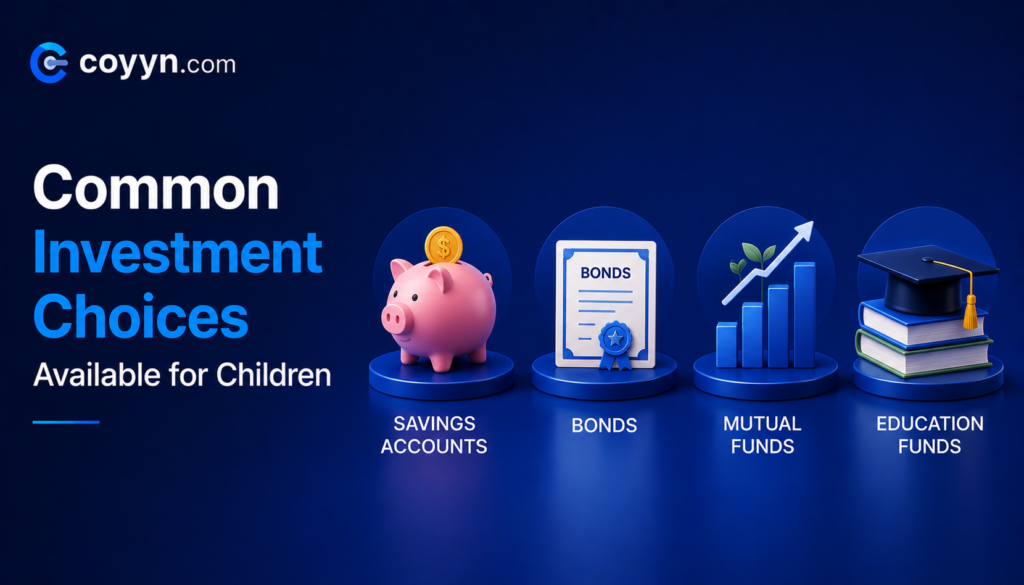
Managing an enormous family savings pool requires dividing your cash reserves into clear, distinct asset classes that serve different protection roles. Using diversified investing accounts for kids ensures your capital survives seasonal marketplace drops comfortably.
Spreading Capital inside Index Funds
Deploying your extra cash into low-cost index funds captures steady compound growth by tracking entire global marketplaces automatically [CNBC]. This choice groups hundreds of secure corporate businesses together under a single management team to reduce your risk. It is a highly practical option for parents who want a simple hands-off strategy to grow wealth over multiple decades.
Balancing Risk with Stable Bonds
Purchasing government or corporate bonds ensures your child’s portfolio receives fixed interest returns regardless of daily market volatility. This secure asset class functions like a financial anchor that keeps your primary funding lines stable during an economic downturn. It protects your short-term operational cash reserves and keeps your core capital balances completely safe from sudden price drops.
Accumulating Wealth through Dividend Stocks
Investing in high-quality dividend stocks allows your child’s wallet to collect regular cash payouts from established market leaders. You can set your dashboard settings to reinvest these micro-earnings back into new shares automatically to activate compound growth fast. It provides a highly convenient way to expand your independent portfolio runway with minimum manual administrative effort.
Common Mistakes Parents Should Avoid
Many small business owners spend hours building a successful shop but wait too long before starting a savings plan for their children. Delaying your family financial planning is a major investment risk because you lose valuable years where compound interest could expand your capital. Another massive mistake is chasing risky internet trends or taking unnecessary risks on unverified tokens instead of practicing strict portfolio diversification.
Ignoring high platform fees and forgetting to set up regular monthly contributions can also stall your wealth-building momentum over time. Additionally, failing to teach your children about basic money management can cause them to waste their inherited savings later in life. Reviewing your asset logs regularly fixes these structural planning gaps and keeps your corporate capital pools fully defended from unexpected market volatility.
Helping Children Learn Good Money Habits While They Grow
Building a lasting brand requires teaching your kids excellent financial literacy principles while they are still living at home. You can introduce age-appropriate money management lessons by showing them how your digital wallet app tracks spending and savings goals. Teaching them the difference between immediate shopping needs and long-term investing targets builds deep financial discipline early in life.
Encouraging your children to practice saving a portion of their own birthday gifts or chore money helps them build strong savings habits. You can help them set up a small target chart on your phone screen to monitor their progress toward buying a favorite toy. Staying disciplined with these basic budgeting rules boosts their financial confidence and ensures they grow up ready to manage their own corporate assets cleanly.
Final Thoughts
Organizing your family savings through a smart internet dashboard prepares your company and household for long-term success by cutting out repetitive administrative math. Regularly deploying investment accounts for kids and utilizing automated software tools ensures your independent venture stays strong, steady, and fully optimized for the future.
You must remember to review your family financial planning goals regularly to ensure your choices match your personal risk tolerance and long-term investing timeline. Have you ever tried using an automated online dashboard to help optimize your weekly family budget?
FAQs
What is an investment account for kids?
An investment account for kids is a specialized financial folder managed by an adult for the long-term benefit of a minor. It allows parents to store cash, stocks, and secure bonds for their children’s future needs.
Can a child legally own an investment account?
A child cannot open a standard brokerage account alone due to age laws, but they can legally own the assets inside a custodial account. An adult custodian handles all the daily transaction settings until the child reaches legal adulthood.
What is the best investment account for kids?
The best account depends on your goals, but 529 plans are exceptional for college savings, while UTMA/UGMA folders offer great asset flexibility. Look for platforms that charge zero monthly maintenance fees to keep your savings growing fast.
When should parents start investing for their children?
Parents should start investing as early as possible, ideally right when the child is born, to maximize the benefits of compound interest. Starting early allows even tiny monthly contributions to expand into large capital pools over fifteen years.
What can children invest in?
Minor accounts can hold a wide variety of safe assets, including low-cost index funds, ETFs, diversified mutual funds, and fixed-income government bonds. These choices help parents build a balanced, protected portfolio for their family.