
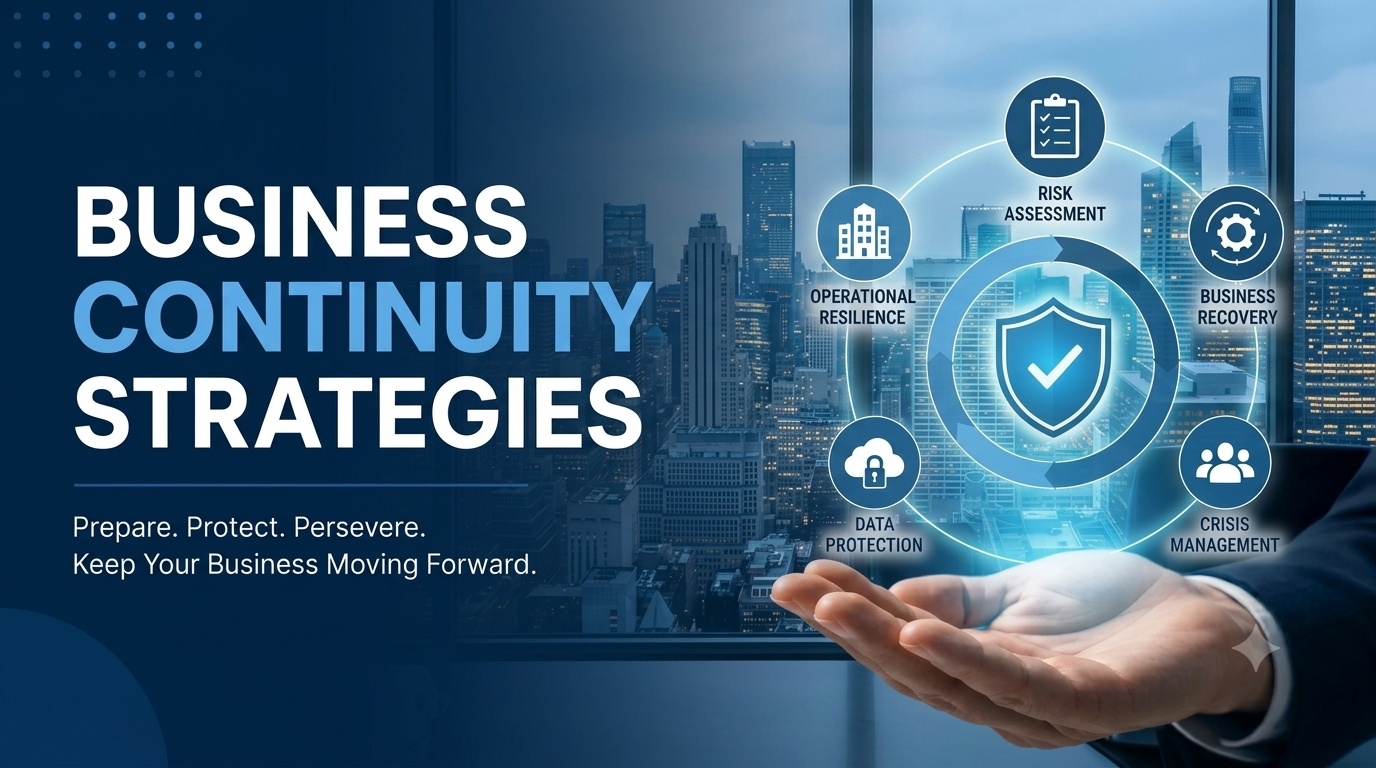
Preparing for unexpected store closures or database crashes should be a main priority for every smart shop owner. If you do not have a clear emergency path ready, a sudden power drop can completely freeze your company sales.
Learning how to deploy reliable business continuity strategies ensures your staff can handle disasters without losing client trust. This preventative risk management habit builds a solid defensive shield, ensuring your digital workflow maintains operational resilience.
Good protective planning functions like a backup engine that keeps your brand active during a heavy market storm. You can minimize your financial damage during a surprise system crash because your tools run on remote data servers.
Let us review the best ways to structure your disaster recovery goals so you can protect your independent company balance sheets with confidence.
What Is Business Continuity and Why Does It Matter
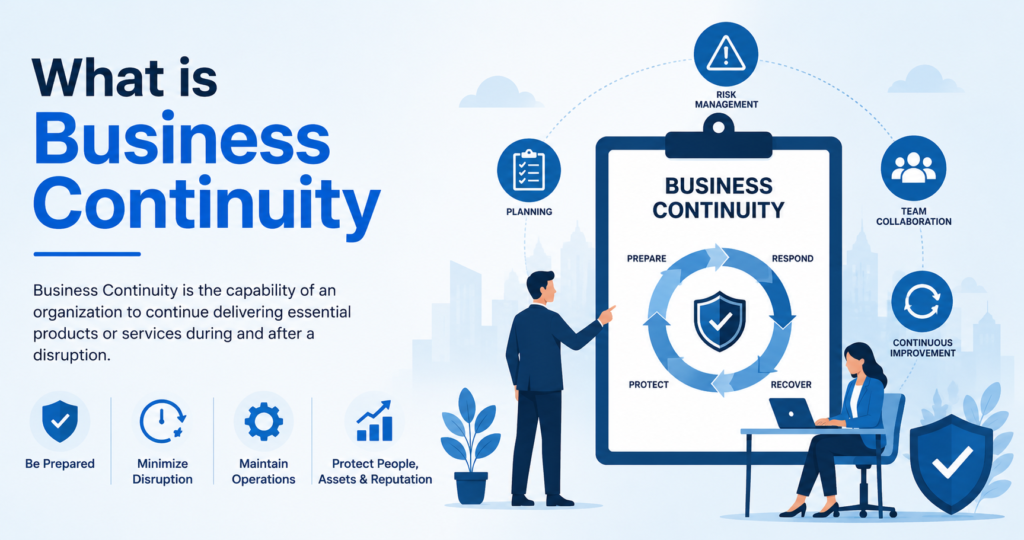
Hearing complex risk management terms on the news can easily make company safety sound much more difficult than it actually is. Business continuity simply means having a clear plan to keep your store open and active when unexpected problems happen. It is a vital strategy designed to shield your daily operations from sudden business risk factors like broken supply networks or storm damage.
Maintaining this level of operational resilience is highly important because a long shutdown can destroy your monthly profit margins. For instance, if an online storefront suffers a surprise cyberattack, a strong crisis management plan helps them switch to secondary systems right away.
Having these immediate backup procedures ready ensures you can serve your regular buyers without letting temporary accidents ruin your brand reputation.
Building an Effective Business Continuity Plan Step by Step
Designing a defensive roadmap requires looking at your company layout carefully before any emergency happens. Writing a reliable business continuity plan helps your staff members know exactly who to call and what tools to open during a crisis.
- Complete a thorough risk assessment to list every single hazard that could hit your warehouse or computer dashboard
- Run a detailed business impact analysis (BIA) to see how much money your shop would lose if your website goes offline
- Calculate your exact recovery time objective (RTO) to see how fast your systems must turn back on after an outage
- Set a strict recovery point objective (RPO) to decide how many hours of transaction data your store can afford to lose
- Write down all emergency login keys and staff roles inside a clean master document that anyone can view from home
Testing these specific steps once a month ensures that your safety procedures work correctly without any confusion. It helps growing startups fix hidden technical speed bumps before a real emergency tests their infrastructure.
Business Continuity Management and Its Role in Daily Operations
Taking care of an entire office framework requires building an active governance team to oversee your corporate safety settings. The main goal of business operations management is to ensure that your staff follows your official company policies during a disruption. This department checks your software tools every week to guarantee that your emergency communication links stay active and compliant.
This leadership role focuses heavily on organizing quick incident response drills so your workers do not panic during a real emergency. Supervisors write simple instruction sheets that show your front-line team how to protect client data privacy during a network failure. Keeping your business operations fully prepared cuts down on confusion and helps your brand maintain strict regulatory compliance standards.
Choosing the Right Strategy for Different Business Risks
Every specific type of industrial accident requires a unique set of tools to minimize your company’s financial losses. Setting up a custom business continuity strategy for separate hazards ensures your team can respond to problems without wasting vital minutes.
- Natural disasters require remote cloud server links so you can access your business records from a safe location
- Cyberattacks require immediate system lockdown keys to isolate infected devices and protect private client funds
- Supply chain disruptions require working with multiple backup vendors so you never run out of raw ingredients completely
- Power failures require automatic emergency battery systems to keep your internet routers running around the clock
- Workforce shortages require cross-training your employees so any team member can handle basic billing and shipping tasks
Preparing these unique emergency response paths shields your independent micro-business from unexpected local operational bottlenecks. It allows you to protect your short-term operational cash reserves while your primary branch location resolves its technical issues.
Understanding the Business Continuity Framework and Its Core Components
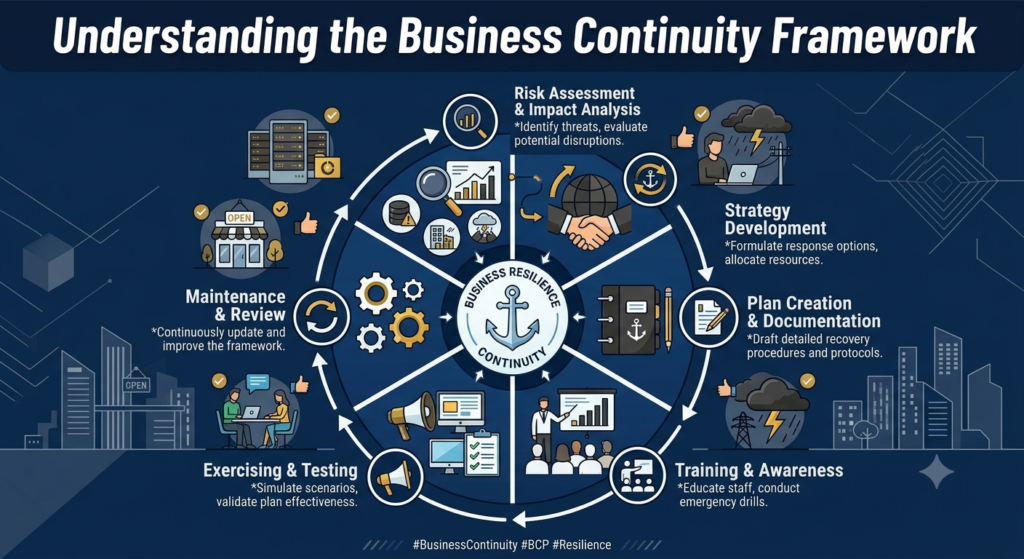
Building a truly resilient organization requires aligning your company rules with a verified global protection model. Using an official business continuity framework gives your management team a clear blueprint to build high-grade risk controls.
This structured approach outlines how to set up corporate governance rules that protect your brand from top to bottom.
Setting Up Smart Business Policies
Many advanced platforms follow the ISO 22301 international standard to ensure their business policies match modern benchmarks [Fintech Nexus]. This baseline helps management teams write clear instructions for front-line workers before a real crisis hits. It establishes a strong operational foundation so your company can handle surprise market shocks cleanly.
Deploying High Grade Risk Controls
Using this structured model allows independent creators to place strong defensive links around their digital asset protection files. These automated safety features monitor your dashboard connections around the clock to block unexpected processing gaps. It guarantees that your corporate capital pools stay fully defended from outside operational hazards.
Committing to Continuous Improvement
This safety setup focuses heavily on continuous improvement by forcing teams to update their plans regularly. Your staff reviews the emergency links every time you install new corporate software utilities on your phone. Keeping your protection rules freshly updated ensures your independent venture remains completely stable for the future.
Business Continuity Recovery Strategies That Help Organizations Recover Faster
When a massive system failure happens, your primary goal is to guide your workflow back to its normal routine as quickly as possible. Implementing targeted business continuity recovery strategies ensures that your technical infrastructure restores its data folders without manual errors. Leaders use these recovery planning steps to coordinate their staff assignments during a live crisis.
A successful incident response setup prioritizes employee communication to ensure your workers stay safe and informed throughout the event. Your customer support agents get clear text templates to explain the situation to your online buyers honestly. Managing your business recovery with this level of clarity protects your brand reputation and prevents users from leaving your app.
Why a Backup Strategy Is an Important Part of Business Continuity
Losing your historical client invoices or payment logs can easily turn a minor computer glitch into an absolute financial disaster. Deploying a modern backup strategy for business continuity ensures that a duplicate copy of your data stays safely locked away on the web. This data backup system acts as a digital safety net for your entire commercial history.
Utilizing modern cloud computing utilities allows your dashboard to sync your real-time transaction ledgers to multiple offsite data recovery stations. You should set your backup systems to save your files automatically multiple times a day to prevent data drops. Testing your recovery procedures regularly guarantees that you can restore your online business store within a few short clicks.
Common Mistakes Businesses Make When Planning for Disruptions
Many small business owners spend hours writing a beautiful safety plan but then store the document away in a back drawer where it gathers dust. Leaving your crisis management roadmap unverified is a major business risk that can lead to total failure during a real emergency. If your workers do not practice their emergency response steps, they will easily forget what to do when a system breaks.
Another massive mistake is ignoring modern cyber risks or failing to provide regular employee training on basic network security.
Outdated software tools and weak communication links can cause your disaster recovery setup to collapse under pressure. Reviewing your protection plans ensures that your corporate capital pools stay fully defended from unexpected technical hazards.
Best Practices for Keeping Your Business Running During Unexpected Events
Building lasting operational resilience requires tracking your system metrics regularly to catch technical vulnerabilities before they grow. Following a few simple baseline habits keeps your entire team fully prepared for sudden market shifts.
- Setting up automated risk monitoring tools to alert your staff the second a server connection drops
- Reviewing your external vendor contracts twice a year to ensure your emergency planning links stay active
- Encouraging high staff awareness through short safety briefings to cut down on operational mistakes
- Using low-cost digital utilities to store your emergency contact sheets safely on the web
- Tracking your technical system restoration dates directly on your mobile phone screen
Staying disciplined with these core business preparedness rules keeps your commercial cash flow running cleanly all year long. It allows self-employed operators to protect their profit margins from unexpected disruptions without paying high manual consultant fees.
Final Thoughts
Organizing your emergency safety plans through a smart internet platform prepares your company for long-term success by cutting out repetitive administrative work. Utilizing clear business continuity strategies and automated software tools ensures your independent venture stays strong, steady, and fully optimized for the future. Have you ever tried using an automated online platform to help streamline your daily company tasks?
FAQs
What are business continuity strategies?
Business continuity strategies are smart, preventative action plans that companies use to stay active during unexpected emergencies. They include data backup systems, alternative vendor links, and clear employee safety steps.
What is a business continuity plan?
A business continuity plan is an official master document that outlines exactly how a company will respond to a major disruption. It includes risk assessment details, emergency login keys, and specific staff responsibilities.
What is the difference between business continuity and disaster recovery?
Business continuity focuses on keeping the entire company open and running during a crisis. Disaster recovery is a smaller, technical section of the plan that deals specifically with restoring computers and saving lost data.
How often should a business continuity plan be updated?
A company should review and update its safety plan at least once a year or whenever they install new software tools. Regular testing ensures that the emergency steps match your actual current business workflow.
Why is data backup important for business continuity?
Saving your records on cloud networks ensures that a surprise server crash cannot erase your historical customer transactions. It allows your shop to restore its digital bank statements and resume client billing within minutes.