

Running a successful shop or digital company requires tracking how your daily tasks flow from morning until night. If your workers spend too much weekly time fixing minor scheduling errors, your overall productivity will suffer. Learning how to deploy business process optimization methods helps you identify and eliminate unnecessary steps from your working calendar. This foundational business process ensures that your tools, data folders, and employee schedules move together in a tidy line.
Good process improvement acts as a smart engine that helps your entire team increase its daily output without working extra hours. You never have to stay up late doing manual receipt tracking because your background system handles the heavy lifting automatically.
Let us take an authoritative, friendly look at how a healthy business workflow runs so you can optimize your independent company balance sheets with confidence.
What Is Business Process Optimization and Why Does It Matter
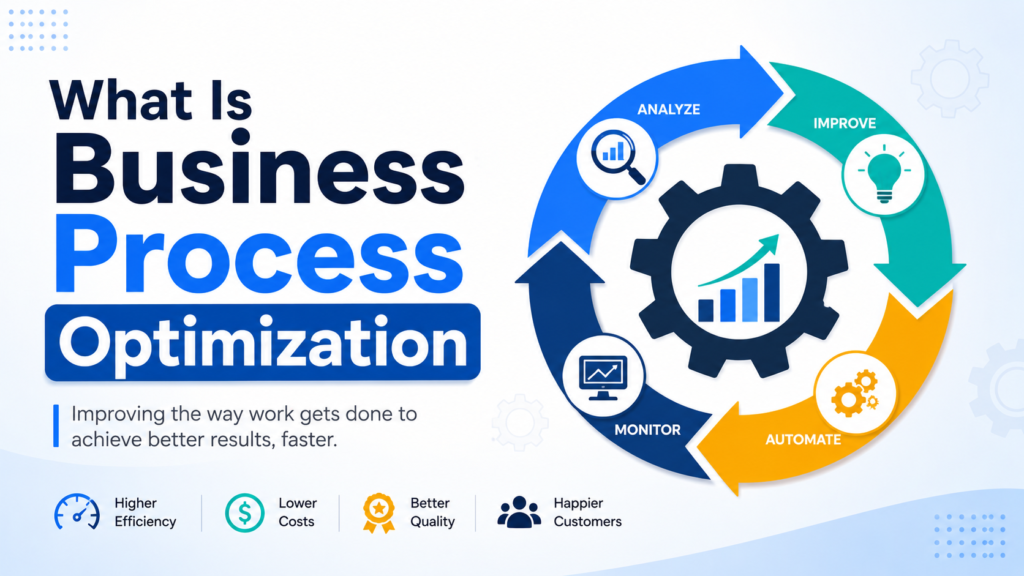
Business process optimization streamlines repetitive daily operations to increase efficiency, reduce costs, and improve safety by eliminating data gaps and manual errors. This structured approach protects profit margins and supports growth by optimizing workflows, such as automating e-commerce label printing and inventory management. Read the full analysis on Coyyn.com.
Maintaining this clear workflow structure is highly important because it prevents your small shop from losing money on repetitive manual mistakes. For example, a local e-commerce store needs a set system to print labels, update stock files, and collect customer cash safely. Using advanced mapping to simplify that chain supports your overall business growth and shields your profit margins from unexpected costs.
Signs Your Business Processes Need Improvement
Recognizing hidden operational friction early helps you protect your short-term operational cash reserves before minor glitches grow into major financial losses. Many self-employed operators ignore these warning signs until their customer complaints begin to pile up on their message dashboards.
- Slow workflows that force your front-line team to spend hours waiting for email approvals from managers
- Repeated mistakes inside your weekly client invoices that require manual corrections and slow down cash flow
- Skyrocketing operating costs that eat into your profit margins due to wasting money on unnecessary tools
- Poor communication gaps between your office staff and warehouse workers that cause incorrect shipping packages
- Frequent customer complaints regarding delivery delays or unhelpful automated tech support responses
If your store suffers from any of these common corporate speed bumps, it means your underlying business workflow needs a serious process analysis check. Fixing these structural gaps improves your operational performance and ensures your resource management stays completely healthy.
Building a Business Process Optimization Strategy That Works
Designing an efficient corporate roadmap requires setting clear targets before you purchase any new software utilities. Writing a realistic business process optimization strategy ensures your management team can measure performance without any technical confusion.
- Set clear objectives to decide exactly how many hours or how much money you want to save each month
- Identify structural bottlenecks by tracking how long a single customer order stays stuck in your warehouse files
- Measure current performance records using real-time transaction ledgers to view your true baseline costs
- Prioritize improvements by fixing the slowest or most expensive workflow delays first to see fast rewards
- Create simple step-by-step instruction sheets so your employees know exactly how to use the new framework
Testing this workflow analysis plan during regular business planning sessions keeps your entire workforce moving in the same direction. It helps growing startups eliminate manual administrative friction and establish an accurate system for performance measurement.
How to Optimize Business Processes Step by Step
Reorganizing your daily business operations requires following a disciplined, multi-layered action plan to keep your records pristine. Learning how to optimize business processes safely ensures you can deploy modern changes without breaking your existing client communication links.
- Review your current processes carefully by interviewing your front-line workers about their daily workflow management struggles
- Find inefficiencies or repetitive data tasks that a smart computer program could easily handle automatically
- Test improvements on a small scale by running your new system in just one department for a few days
- Measure results using clear digital bank statements to confirm that your processing speeds actually increased
- Keep refining your systems based on live employee feedback to ensure your tools stay perfectly optimized
Following this continuous monitoring loop protects your commercial assets from unexpected manual math mistakes. It establishes a top-grade process improvement habit that keeps your company nimble, resilient, and ready for future market growth.
Business Process Optimization Tools That Support Daily Operations
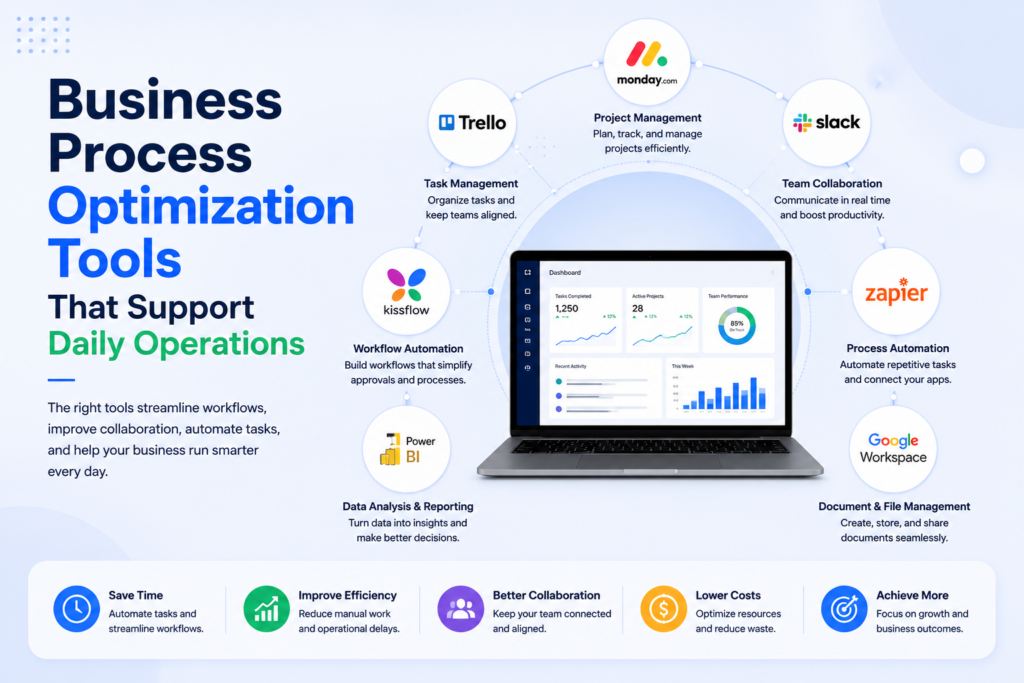
Using old paper logbooks or messy spreadsheet files can easily turn your daily project management into an absolute nightmare. Upgrading your workspace to modern business operations tools connects your company data to helpful collaboration platforms instantly.
- Specialized workflow software that lets you assign jobs to your workers and track deadlines on your phone screen
- Advanced process mapping utilities that build clear visual diagrams of your entire production line automatically
- Integrated project management dashboards that show your complete project status to your team in real time
- Low-cost collaboration tools that help your remote staff chat and share files without unexpected communication delays
Transitioning to these advanced web systems takes the stress out of daily financial tracking so you can focus on building products. It gives independent operators the power to run a clean corporate profile with minimum manual administrative effort.
Choosing the Right Business Process Optimization Software
Selecting the best virtual toolkit for your store depends heavily on how easily the new system connects to your existing accounts. Investing in high-grade business process optimization software helps you cut out boring manual data entry tasks completely.
- Check for paperless onboarding features that let your staff set up their profiles within a few short minutes
- Look for systems that include a secure Plaid bank connection to sync your funds safely with your app
- Ensure the tool provides cross-platform account synchronization so your devices always show the exact same numbers
- Pick a platform that offers transparent pricing models with zero monthly maintenance fees to protect your budget
Deploying this type of advanced business software gives you access to fast ACH direct deposit networks to speed up your client payouts. It provides a superior level of automation that helps independent startups scale their operations comfortably without hiring expensive consultants.
Common Mistakes That Slow Down Business Processes
Many small business owners spend thousands of dollars on fancy tools but fail to write down simple rules on how to use them. Leaving your process standardization unverified is a major corporate risk that can cause your entire workflow to collapse under pressure. If your team does not have clear documentation files, workers will easily mix up their duties and create messy calendar clutter.
Another massive mistake is ignoring regular employee feedback or refusing to encourage open team collaboration among different branches. Sticking to outdated legacy computer systems and old billing methods will naturally cause your production speeds to drop behind your market competitors. Reviewing your operational habits ensures your corporate capital pools stay fully defended from unexpected administrative waste.
Real Examples of Business Process Optimization in Different Industries
Every distinct market sector uses custom systems to streamline its daily supply chain and reduce operational overhead. For instance, retail operations optimize their storefronts by using digital scanners that update warehouse stock data instantly. Modern manufacturing plants use automated robotic assembly lines and predictive maintenance checks to keep their machinery running safely.
In the healthcare field, administrative teams use electronic scheduling files to cut patient waiting times and secure medical history folders. Online e-commerce shops rely on automated internet payment networks and smart invoicing software integrations to process global buyer cash. Every single one of these industries utilizes advanced technology to keep its real-time transaction ledgers perfectly accurate.
Measuring Success After Improving Your Business Processes
Once you complete your workflow upgrades, you must track your performance metrics regularly to confirm your real-world savings. Learning how to optimize business processes correctly gives your brand a superior level of workflow efficiency that shows up clearly on your balance sheets.
- Time savings that allow your employees to complete their core daily operations ahead of schedule
- Deep cost reduction achieved by eliminating high platform fees and unnecessary paperwork printing expenses
- Fewer errors inside your annual accounting files thanks to automated expense categorization software tools
- Higher customer satisfaction scores due to delivering your digital products much faster to your online buyers
- Increased employee productivity since your staff can focus on creative growth rather than manual data logs
Monitoring these clear results tells you exactly how much your general business performance improved over the quarter. It ensures your independent venture remains completely stable and fully prepared for seasonal shopping spikes.
Final Thoughts
Organizing your commercial activities through a smart internet platform prepares your company for long-term success by cutting out repetitive administrative math. Regularly deploying business process optimization methods and automated software tools ensures your independent venture stays strong, steady, and fully optimized. Embracing modern process improvement frameworks is the single best strategy to protect your profit margins from unexpected market changes. Have you ever tried using an automated online platform to help streamline your daily company tasks?
FAQs
What is business process optimization?
Business process optimization is the habit of reviewing and refining your everyday workflows to make them faster and cheaper. It involves removing unnecessary data tasks and using automation to handle boring administrative math.
Why is business process optimization important?
Optimizing your systems prevents your independent company from losing cash on slow, manual bookkeeping errors. It boosts your overall employee productivity and ensures your customers receive their packages on time.
How do you optimize business processes?
You optimize your processes by analyzing your current workflow, identifying slow bottlenecks, and testing automated software tools. You must monitor your results regularly to keep your systems running smoothly.
Which software is best for business process optimization?
The best software options offer paperless onboarding steps, low platform fees, and secure bank connection tools like Plaid. Look for platforms that include automated expense sorting and real-time ledger tracking features.
What are the benefits of process optimization?
The main benefits include major time savings, lower operating costs, fewer manual calculation mistakes, and happier clients. It helps small business owners scale their ventures without spending money on extra staff.